Photography
Visual Noise
An interiors story about reducing noise without removing memory, warmth, or evidence of daily life.
An interiors story about reducing noise without removing memory, warmth, or evidence of daily life.
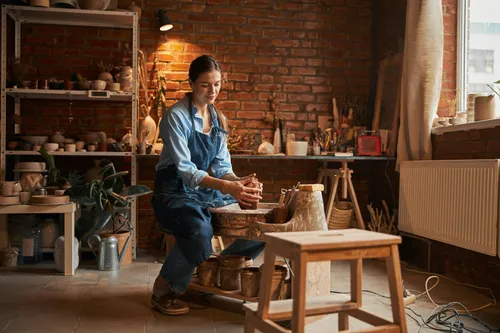
The studio is most honest before it is cleaned. A roll of paper leans against the wall, two samples sit too close together, and a line of notes crosses the desk in an order that only makes sense to the person who left it there. Nothing looks finished yet, but the room has already started to think. It is holding the early version of the work, before the work knows what it wants to become. The table is crowded, but not careless; every object seems to have arrived because someone needed to test a feeling with their hands before trusting it to language.
On the morning we visited, the project had not reached the stage where it could be described cleanly. The team was still using objects to find the edge of the idea: a pale material beside a darker print, a rough surface against a clean fold, a video paused on the frame where the room seemed to breathe. These were small decisions, but they were not minor. Each one narrowed the distance between a loose mood and a finished piece. The longer we stayed, the more it became clear that the studio was not a backdrop to the work. It was part of the method.
What makes a creative room interesting is not the mythology of genius or the romance of disorder. It is the practical way attention gets arranged. The wall keeps certain references visible because memory is unreliable. The desk holds unfinished combinations because taste changes when two things sit beside each other long enough. The chair near the window is not a design gesture; it is where someone goes when the screen has become too loud. A good studio gives each kind of thinking a place to happen, then lets the work move between them without too much ceremony.

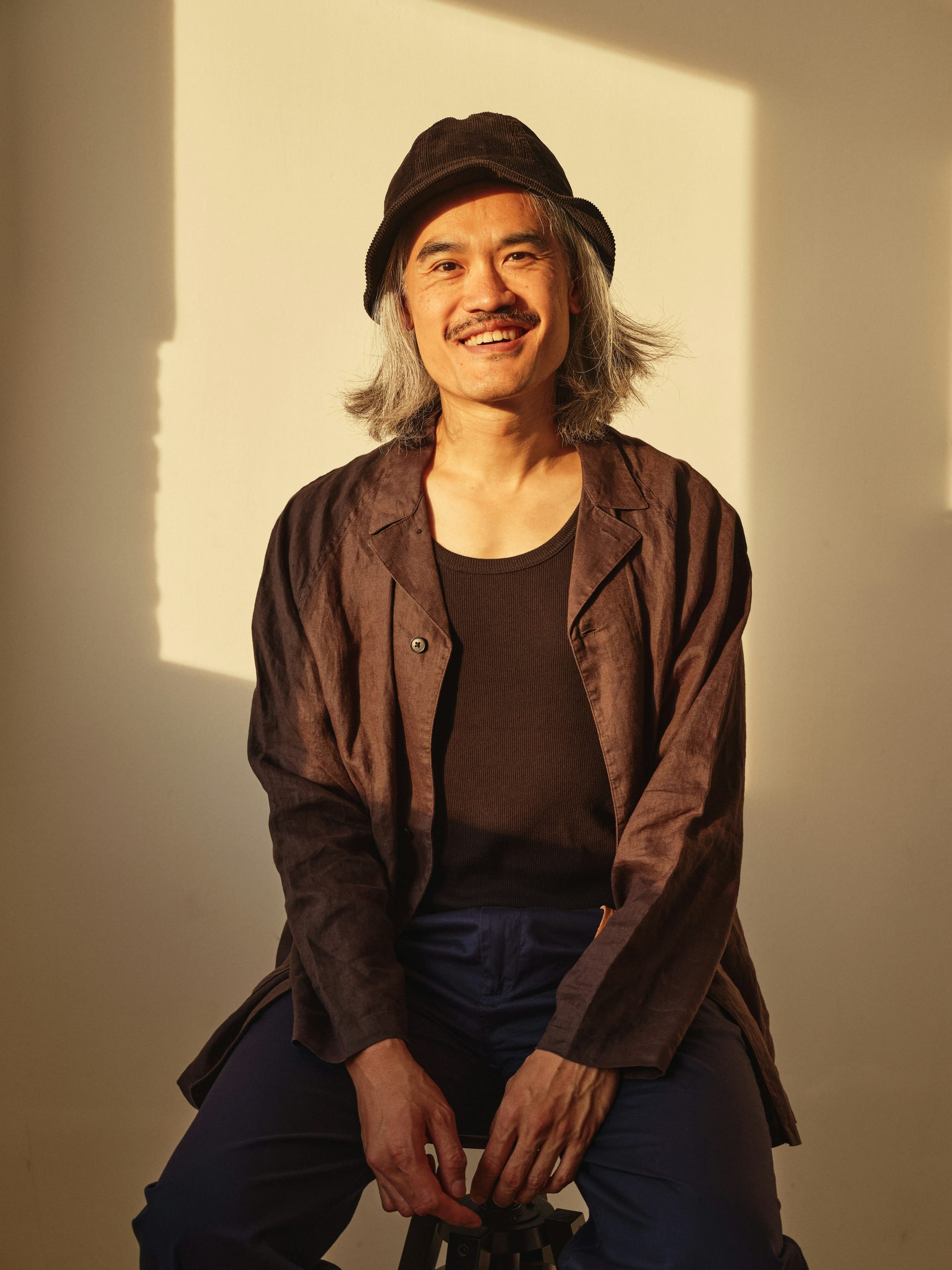
The room was not a backdrop to the work
By afternoon, the room had edited itself. Several images were gone, one material had moved to the center of the table, and the notes had become shorter. Nothing announced the change, but the work felt less crowded. That is the useful thing about a physical room: it lets judgment happen at the scale of the hand. You can move a reference away, step back, and feel the project become lighter before you can explain why.
The room was not a backdrop to the work. It was part of the method.
The finished piece will not show every path that failed, and it should not. But the decisions made in the room will remain inside it: the measured crop, the quiet gap, the repeated color, the object allowed to stay because it carries the whole mood in a smaller form. Leaving the studio, the most memorable detail was not a tool or a finished image. It was the discipline of the unfinished room, and the way it made space for accident without letting accident take over.
There is a particular kind of concentration that only appears in rooms where things are still being decided. Conversation becomes quieter, not because anyone is trying to be solemn, but because the work has begun to answer back. Someone lifts a sample, puts it down, moves it half an inch, and the whole table changes. Someone else reads a sentence aloud and leaves a pause after it, waiting to see whether the room accepts the line. These moments would be almost invisible in a finished presentation, but inside the studio they are the real event.


The room also made clear that editing is not only an intellectual act. It is physical, repetitive, and sometimes boring in the useful way that serious work is often boring. A stack is made, then unmade. A note is copied because the first version was too vague. A reference is kept for another hour, then finally removed when its charm has stopped helping. By the time a project looks inevitable, it has usually passed through many quiet states that were not inevitable at all. That hidden uncertainty is what gives the final piece its weight.
A studio also has a moral atmosphere, though that may sound too large for such ordinary evidence. It reveals what kind of attention a group is willing to protect. Some rooms protect speed, and the work that leaves them carries the bright surface of quick agreement. Others protect doubt long enough for the first answer to become less persuasive. This room belonged to the second kind. It allowed uncertainty to stay present without letting uncertainty become the whole point.
That may be the real value of seeing work before it becomes presentable. The unfinished room gives a more generous account of taste. Taste is not only what someone likes; it is what someone can bear to remove, what they can wait for, what they can leave unresolved until the right pressure appears. The studio made that patience visible. It showed that a finished piece is not born from clarity alone, but from the long discipline of making clarity possible.
A room of samples, notes, and half-made decisions shows how attention becomes finished work.
A visual archive of sport, repetition, weather, and the quiet frames that hold a season together.
A listening room built from domestic scale, familiar objects, and the ritual of staying with one record.
A study in restraint, rhythm, and recognizability for writing without becoming louder than the work.
A journal on design, interiors, photography, travel, and culture, for readers who notice how images and places
shape a story.




Deep work is easier to praise than to protect. The calendar fills, messages arrive, and the day becomes a series of small recoveries. Attention needs more than intention. It needs a boundary that is visible enough to be respected and simple enough to repeat. Without that boundary, the work begins each morning by negotiating with everything that wants a piece of it.
The boundary can be modest: a block of time, a closed door, a different chair, a shared team rule, a phone in another room. What matters is that the work does not begin by fighting every possible interruption. The first minutes should belong to the task, not to negotiation. A protected hour is not only time saved; it is a different quality of attention from the first minute onward.
Preparation is part of the boundary. Open the files, gather the references, write the question, and remove the tools that are not part of the session. A prepared session has less internal noise. You are not asking yourself what to do next every ten minutes; you are following a path chosen when attention was clearer. That path does not make the work easy, but it makes the resistance more honest.

Deep work also needs recovery that is not just another screen. A walk, a meal, a quiet errand, or a few minutes outside gives the mind a different texture. Without that shift, the next block begins tired, even if the calendar says there is time. Recovery is not the opposite of seriousness. It is one of the conditions that lets seriousness continue.
Deep work asks for a different courtesy.
The end of the session should leave a trace: what changed, what is next, and what is blocked. That note protects the next beginning. It turns deep work from a rare mood into a rhythm that can survive a normal week. The test is not whether the day felt busy. The test is whether the important work had a protected place to happen.
The difficulty is that deep work rarely feels urgent before it begins. It does not shout like a message or arrive with the visible pressure of a meeting. Its importance is slower, and because it is slower it is easier to sacrifice. Protecting it requires treating quiet work as real work before anyone else has asked for proof. A calendar block may look ordinary, but inside it is the difference between reacting to the week and making something that could not be made in fragments.
There will still be days when the boundary fails. A call runs long, a problem enters the room, or the mind refuses the work even after the conditions have been prepared. That failure does not make the practice false. It only means the boundary has to be restored without drama. Deep work becomes sustainable when it is allowed to be human: protected seriously, interrupted sometimes, and returned to without turning every missed session into a verdict on the person who missed it.
Protecting deep work also means protecting the early, unimpressive part of it. Before a draft becomes useful, before an image sequence finds its rhythm, before a problem reveals its structure, there is often a period that looks unproductive from the outside. That period is easy to interrupt because it has not yet produced evidence. But it may be the part most in need of shelter.
The quieter work of protection is learning not to apologize for that shelter. A closed door, a delayed reply, or an unavailable morning can feel severe in a culture that treats instant response as politeness. But attention has limits, and pretending otherwise only makes the work thinner. Deep work asks for a different courtesy: the courtesy of letting something difficult remain whole long enough to become clear.