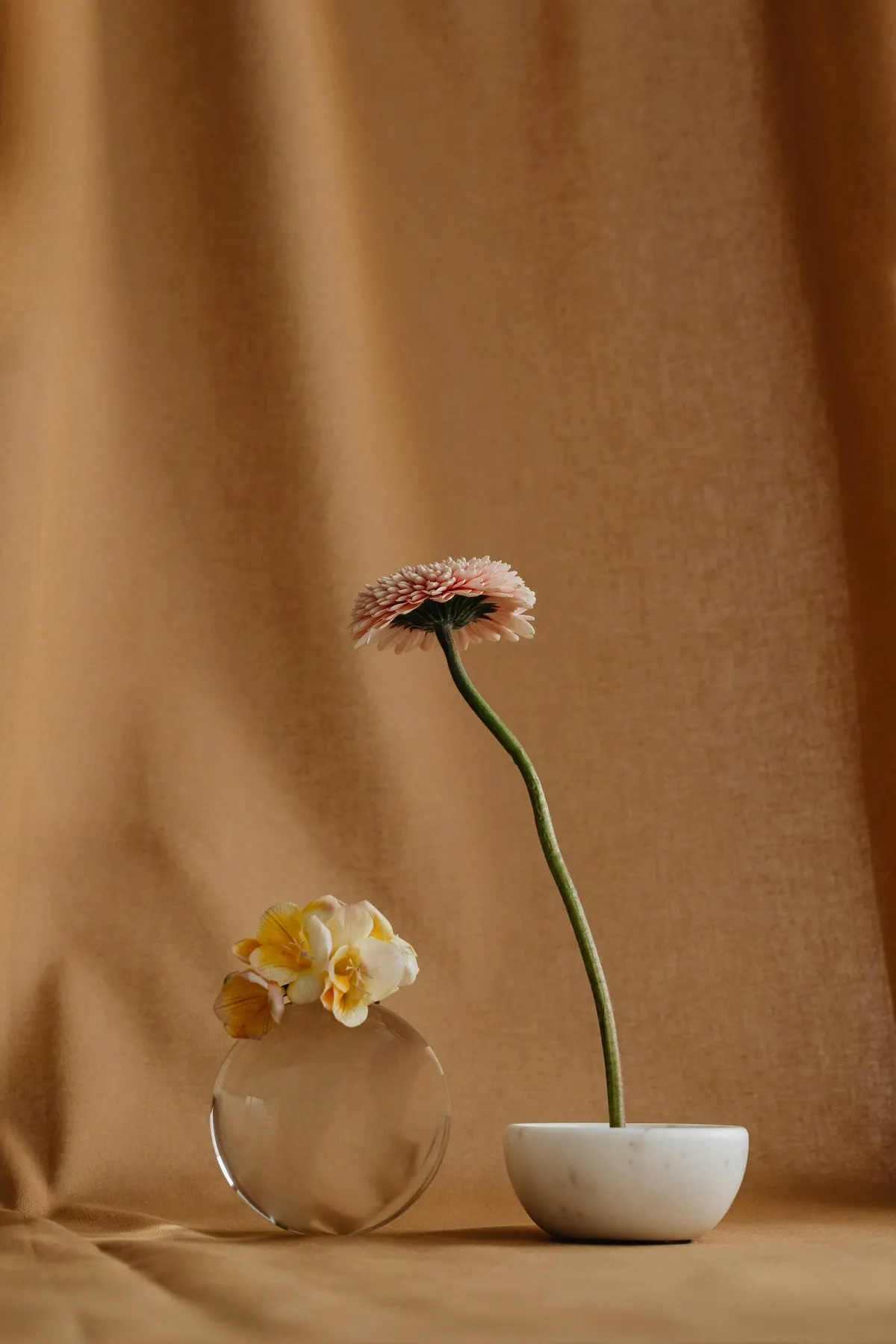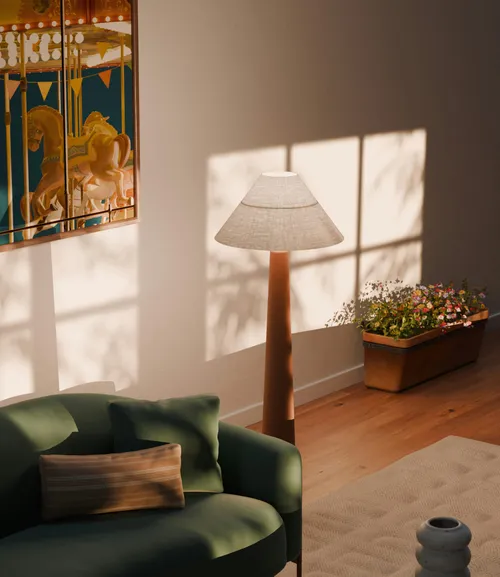

Visual noise is not the same thing as having too many things. A room can be full and still feel calm if the objects share rhythm, purpose, or space. The problem begins when everything asks to be seen at the same volume. The eye has nowhere to rest, so the room feels louder than it is. Quietness, in this sense, is not emptiness. It is hierarchy.
Reducing noise starts with choosing what should lead. It might be the light, a table, a chair, a view, or a wall of books. Once the leader is clear, the rest of the room can support it instead of competing. The edit becomes less about removal and more about relationships. Some objects only become too loud because they have been left without a clear neighbor.
Objects feel calmer when they have company. Gather books, ceramics, tools, or papers into small groups instead of spreading them evenly across every surface. Grouping gives the eye places to land and places to rest. Color can do the same work when a few tones repeat across the room. Repetition makes unrelated things feel like they are part of the same sentence.
Editing a room should not erase personal history. A travel object, inherited bowl, old book, or imperfect chair can stay if it still carries meaning and has enough room around it. The aim is to give important objects a clearer role, not to make the room anonymous. A home that has been edited too far can lose the very evidence that made it worth looking at.
Quietness, in this sense, is not emptiness. It is hierarchy.
The goal is not minimalism as a style. It is readability. A room should tell you where to look, where to sit, and what kind of day it can hold. Calm is an editing decision, not an absence of things. The best rooms do not remove life from view. They give life a structure that lets it be felt.


A room often becomes noisy through kindness. Gifts stay because they were given with care. Books remain because they once mattered. Small objects gather because each one has a story that seems too personal to remove. The edit becomes difficult because the problem is not bad taste; it is accumulated affection. A good room edit has to respect that. It cannot treat every object as clutter simply because the eye is tired.
The better question is not what should disappear, but what deserves more room. Some objects become meaningful again when they are separated from the crowd. A bowl moved to an open shelf, a book placed near the chair where it is actually read, a textile folded where the light can reach it. The room quiets down not because its history has been erased, but because the history has been given a clearer voice.
A room often becomes noisy through kindness. Gifts stay because they were given with care. Books remain because they once mattered. Small objects gather because each one has a story that seems too personal to remove. The edit becomes difficult because the problem is not bad taste; it is accumulated affection. A good room edit has to respect that. It cannot treat every object as clutter simply because the eye is tired.
The better question is not what should disappear, but what deserves more room. Some objects become meaningful again when they are separated from the crowd. A bowl moved to an open shelf, a book placed near the chair where it is actually read, a textile folded where the light can reach it. The room quiets down not because its history has been erased, but because the history has been given a clearer voice.
One way to begin is to photograph the room before changing it. The photograph can reveal noise that the body has learned to ignore: the repeated small objects on every surface, the color that appears only once and therefore shouts, the chair that has become storage without anyone deciding it should. A photograph creates distance without requiring immediate judgment. It lets the room be seen as a composition rather than a list of attachments.
After the edit, the room should not feel newly strict. It should feel easier to enter. The chair should look more available, the table more useful, the shelf more legible, the objects more themselves. If the room feels anxious after being simplified, something has been overcorrected. The best edits do not make a home feel controlled. They make it feel more capable of holding ordinary life.