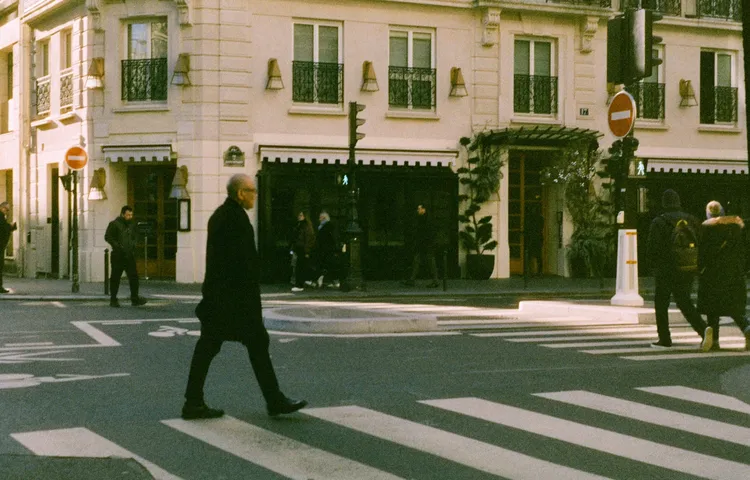
The city changes when you stop trying to cover all of it. A photographer's walk is not a route through every landmark. It is a way of letting light, timing, and small public details choose the pace. The walk becomes better when it has fewer ambitions and more patience. The city does not need to be conquered; it needs to be waited for.
Begin by slowing down at corners. Corners collect movement from more than one direction, and they often hold the best overlaps: a sign, a shadow, a waiting person, a reflection, a delivery cart, a window. Stand still long enough and the street begins to arrange itself. What looked like disorder from a distance becomes a sequence of small arrivals.
Look for repeated shapes before looking for a subject. Railings, balconies, umbrellas, chairs, windows, and painted lines can give the photograph structure. The subject can then interrupt that structure in a useful way. A good city frame often works because something nearly matches and something does not. That slight break is where the eye stays.
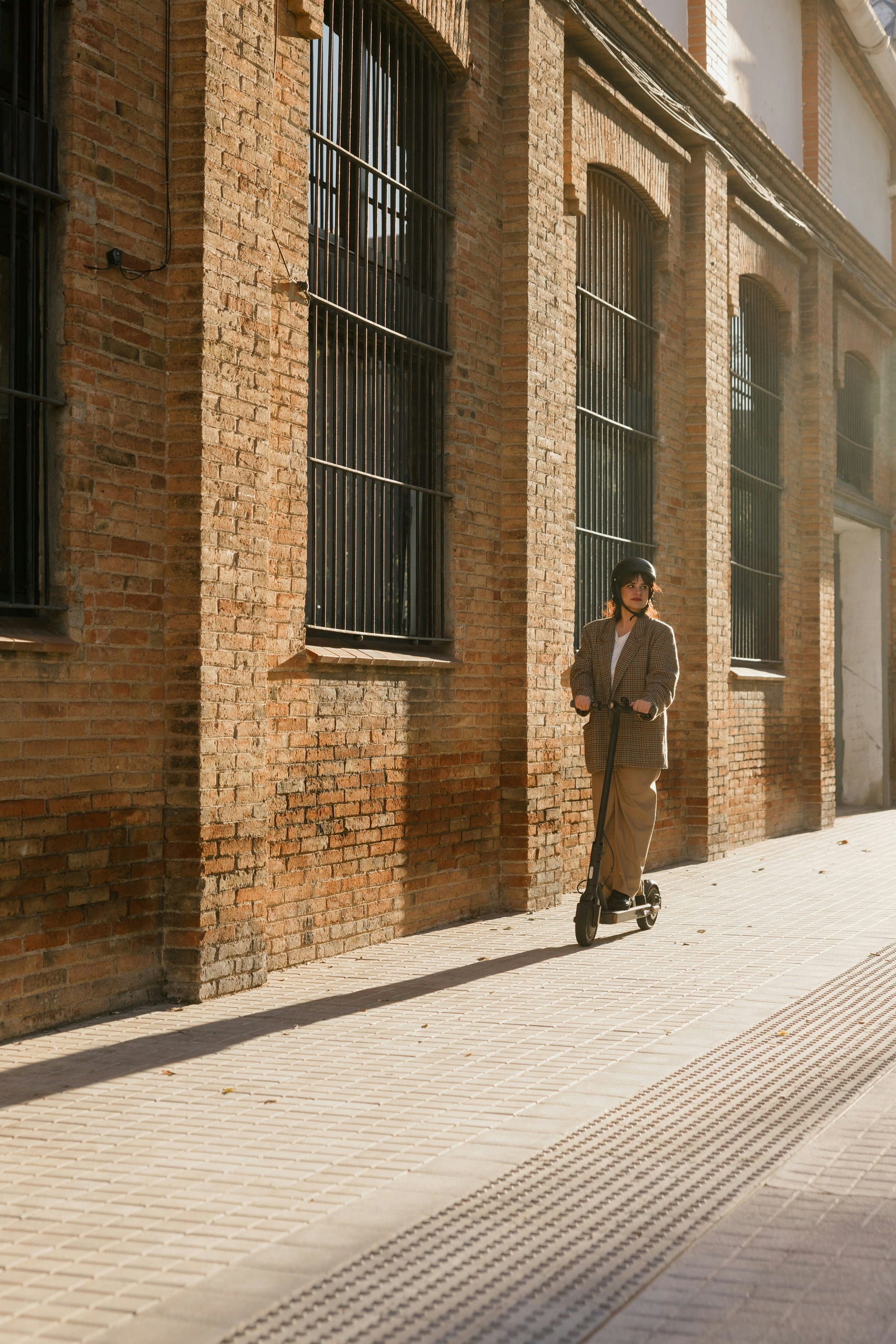
A second walk often teaches more than a new location. The street changes with hour, weather, traffic, and your own attention. Returning lets you separate what belongs to the place from what belonged to a single lucky moment. Repetition turns a casual walk into a small visual study, and the study reveals how much the first walk missed.
The city does not need to be conquered; it needs to be waited for.
After the walk, look at the images together before choosing favorites. A contact sheet shows rhythm, repetition, and gaps that are hard to see one frame at a time. The best photograph may be the frame that makes the rest of the walk make sense. A city story is not always built from the most dramatic image. Sometimes it is built from the image that holds the route together.
Walking with a camera can make a person greedy at first. Every corner seems possible, every reflection seems worth keeping, and the city becomes a series of near photographs. The better walk begins when that hunger slows down. You stop collecting and start waiting. The frame becomes less about proving that the city is interesting and more about noticing when the city briefly becomes clear.
The final edit should preserve the walk rather than only the strongest individual moments. A strange photograph may stay because it explains the street between two better ones. A quiet frame may hold the weather that the sequence needs. The city is not a set of trophies. It is a rhythm of attention, and the photographs should keep some of that rhythm intact. Otherwise the walk becomes only a selection of surfaces, and the feeling of having moved through a place disappears.
Weather is one of the city's editors. Rain deepens color and slows people at crossings. Heat changes posture and makes shade visible. Wind gives fabric a role. Late light separates surfaces that looked flat at noon. A photographer does not need to dominate these conditions. The better choice is often to accept the assignment the weather has already written.
Over time, photographing the city becomes less about finding novelty and more about recognizing attention. The same corner can keep producing different pictures because the person looking has changed, the hour has changed, or the city has made a new arrangement from old materials. That is why the walk remains useful. It teaches that seeing is not a talent you either have or lack. It is a practice of returning with enough patience to be surprised again.